Introduction
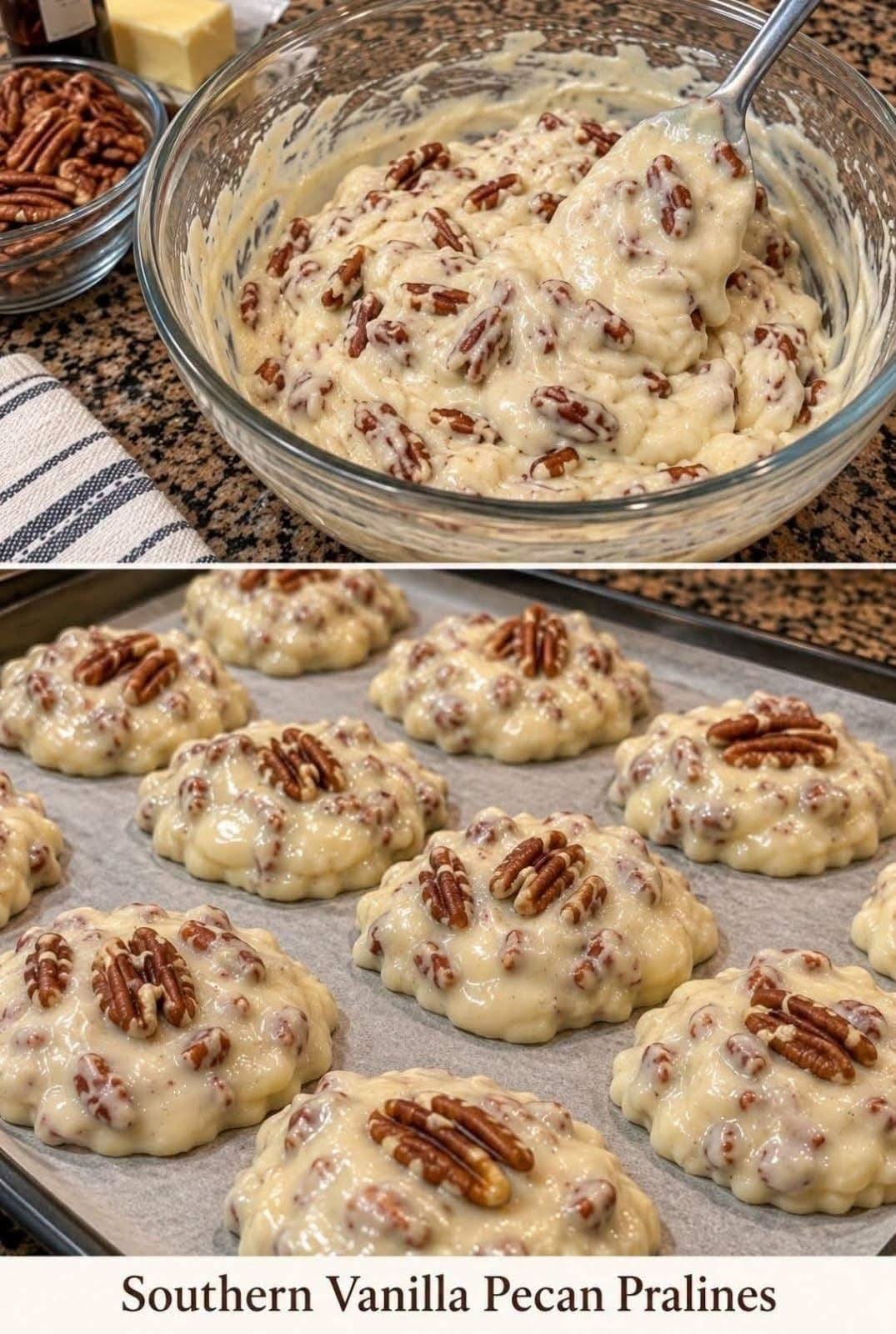
These Southern Vanilla Pecan Pralines are a classic Southern-inspired sweet made with butter, sugar, vanilla, and crunchy pecans. Each praline has a rich, creamy texture and a delicious caramel-like flavor, with generous pieces of pecans throughout. They’re a wonderful homemade treat for holidays, family gatherings, dessert platters, or whenever you’re craving an old-fashioned Southern confection.
What makes these pecan pralines special is their soft, melt-in-your-mouth texture and the combination of sweet vanilla and toasted nuts. The mixture is cooked on the stovetop, then spooned onto parchment paper to cool into rustic, irresistible clusters. With a few simple ingredients and careful temperature control, you can make these homemade pralines right in your own kitchen.
📋 Recipe Overview
| Recipe Detail | Information |
| Recipe Name | Southern Vanilla Pecan Pralines |
| Prep Time | 10 minutes |
| Cook Time | 15–25 minutes |
| Cooling Time | 30–60 minutes |
| Total Time | Approximately 1 hour |
| Yield | 18–24 pralines |
| Course | Dessert |
| Cuisine | Southern-inspired American |
| Difficulty | Moderate |
| Cooking Method | Stovetop |
| Main Ingredients | Pecans, sugar, butter, cream, and vanilla |
| Texture | Creamy, tender, and slightly crumbly |
| Flavor | Buttery, sweet, nutty, and vanilla-rich |
The cooking time and final texture depend on the recipe proportions, pan size, humidity, and how accurately the sugar mixture is cooked.
❤️ Why You’ll Love This Recipe
1. Classic Southern Flavor
These pralines bring together buttery sweetness, vanilla, and pecans for a traditional homemade confection.
2. Plenty of Crunchy Pecans
Chopped pecans add nutty flavor and texture, while whole pecans on top give each praline an attractive finish.
3. Simple Pantry Ingredients
You can make pralines with familiar ingredients, including sugar, butter, cream, vanilla, and pecans.
4. Perfect for Homemade Gifts
Once cooled, pralines can be arranged in decorative boxes or bags for holiday gifts and special occasions.
5. No Oven Required
The mixture is prepared entirely on the stovetop, making this a convenient dessert when you don’t want to bake.
6. Beautiful Rustic Appearance
Each praline is spooned onto parchment paper, creating naturally irregular edges and a homemade look.
7. Ideal for Holiday Dessert Platters
Serve them alongside cookies, brownies, fudge, and other homemade sweets for an inviting dessert spread.
🛒 Ingredients
The photograph shows a pale, creamy praline mixture studded with pecans. The following recipe is a practical version designed to produce similar vanilla pecan clusters. The exact original ingredient quantities cannot be confirmed from the image alone.
1. Praline Mixture
| Ingredient | Quantity |
| Granulated sugar | 2 cups (400 g) |
| Light brown sugar, packed | ½ cup (100 g) |
| Unsalted butter | 4 tablespoons (56 g) |
| Heavy cream | ¾ cup (180 ml) |
| Whole milk | ¼ cup (60 ml) |
| Light corn syrup | 1 tablespoon (20 g), optional |
| Fine salt | ¼ teaspoon |
| Pure vanilla extract | 2 teaspoons |
| Chopped pecans | 2 cups (approximately 220 g) |
2. For Decorating
| Ingredient | Quantity |
| Whole pecan halves | 36–48 halves, approximately 2 per praline |
| Parchment paper | Enough to line 2 baking sheets |
Ingredient notes:
- Pecans: Fresh pecans provide the best flavor. Toasting them lightly before adding them is optional but enhances their nuttiness.
- Heavy cream: Adds richness and contributes to the creamy texture.
- Butter: Unsalted butter lets you control the salt level.
- Brown sugar: Adds a deeper caramel flavor and a warm color.
- Corn syrup: Optional, but it can help reduce unwanted sugar crystallization.
- Vanilla extract: Add it after removing the mixture from the heat to preserve its aroma.
👩🍳 Step-by-Step Instructions
Step 1: Prepare Your Workstation
- Line two large baking sheets with parchment paper.
- Measure all the ingredients before starting.
- Chop the pecans, reserving enough whole pecan halves for decorating.
- Keep a heat-resistant spatula and a tablespoon or small cookie scoop nearby.
Praline mixtures can firm up quickly once they cool, so having everything ready makes portioning easier.
Important: Sugar mixtures become extremely hot during cooking. Use a sturdy saucepan, keep children away from the stove, and avoid touching or tasting the hot mixture.
Step 2: Combine the Sugars and Dairy
- Place the granulated sugar, brown sugar, heavy cream, and milk in a heavy-bottomed saucepan.
- Add the butter, salt, and optional corn syrup.
- Stir gently over medium heat until the sugars begin to dissolve and the butter melts.
- Continue heating until the mixture reaches a gentle boil.
Use a saucepan large enough to allow the mixture to bubble without overflowing.
Step 3: Cook the Praline Mixture
- Attach a candy thermometer to the saucepan, making sure the tip does not touch the bottom.
- Cook the mixture over medium heat, stirring gently until the sugar has dissolved.
- Once the mixture reaches a steady boil, avoid excessive stirring.
- Continue cooking until the mixture reaches approximately 235–240°F (113–116°C), the soft-ball stage.
The exact endpoint depends on the texture you want. A lower temperature generally produces softer pralines, while a slightly higher temperature can produce firmer ones.
Candy-making tip: A thermometer is the most reliable way to control the texture. If you live at a high altitude, the target temperature may need adjustment.
Step 4: Allow the Mixture to Cool Slightly
- Remove the saucepan from the heat once the mixture reaches the target temperature.
- Let it stand undisturbed for approximately 3–5 minutes.
- Add the vanilla extract.
- Stir gently to distribute the vanilla.
Avoid adding vanilla while the mixture is boiling vigorously because its aroma can dissipate quickly.
Step 5: Beat Until Creamy
- Using a sturdy wooden spoon or heat-resistant spatula, beat the mixture for several minutes.
- Watch for it to become slightly thicker and less glossy.
- Stop when it begins to hold its shape while remaining soft enough to spoon.
This step helps develop the characteristic creamy texture of traditional pralines.
Important: Do not wait until the mixture becomes completely stiff in the saucepan. If it hardens too much before portioning, the pralines may be difficult to shape.
Step 6: Fold in the Pecans
- Add the chopped pecans to the mixture.
- Stir until the nuts are evenly distributed.
- Work promptly while the mixture remains spoonable.
The pecans should be coated in the thick vanilla mixture without being crushed.
Step 7: Shape the Pralines
- Scoop approximately 1½–2 tablespoons of the mixture for each praline.
- Drop each portion onto the prepared parchment paper.
- Leave about 2 inches (5 cm) between portions.
- While the pralines are still soft, gently press one or two pecan halves onto the top of each one.
The mixture may spread slightly as it settles. If it becomes too firm to scoop, work quickly rather than trying to reshape fully hardened pralines.
Step 8: Let the Pralines Set
- Leave the pralines at room temperature for approximately 30–60 minutes.
- Allow them to cool completely before lifting them from the parchment paper.
- Check that the centers have set and the bottoms release without excessive sticking.
- Transfer them to a serving plate or airtight container.
Warm or humid conditions can lengthen the setting time.
Step 9: Serve and Enjoy
Arrange the pralines on a dessert platter or place them in individual paper candy cups.
They pair wonderfully with coffee, tea, or a glass of cold milk. For a gift, let them set completely before wrapping them individually.
⭐ Best Tips for Perfect Vanilla Pecan Pralines
Use a Heavy-Bottomed Saucepan
A heavy pan distributes heat more evenly and reduces the chance of scorching the sugar mixture.
Measure the Temperature Carefully
The final texture depends heavily on the cooking temperature. A candy thermometer makes the process more predictable.
Prepare Everything Before Cooking
Parchment paper, pecans, and measuring tools should be ready before the mixture begins to cook.
Avoid Excessive Stirring After Boiling
Once the sugar has dissolved and the mixture is boiling, too much stirring can encourage crystallization.
Add Vanilla Off the Heat
This preserves its fragrance and avoids unnecessary evaporation.
Watch the Texture While Beating
The mixture should thicken but remain soft enough to portion. Waiting too long can make shaping difficult.
Use Fresh Pecans
Stale nuts can taste bitter or rancid, which affects the flavor of the entire batch.
Adjust for Humidity
High humidity can make sugar confections take longer to set and remain softer. Allow extra cooling time if needed.
Practice Makes Perfect
Pralines can be sensitive to small temperature differences. If the first batch is slightly softer or firmer than expected, adjust the cooking endpoint on your next attempt.
🌰 Best Ingredient Options
Pecans
| Option | Result |
| Chopped pecans | Distribute nutty flavor throughout the pralines |
| Pecan halves | Create an attractive decorative topping |
| Lightly toasted pecans | Add a deeper roasted flavor |
| Mixed pecans and walnuts | Offer a slightly different nutty flavor |
Sugar
| Option | Flavor and Texture |
| Granulated sugar | Classic sweetness and structure |
| Light brown sugar | Adds a mild caramel flavor |
| Dark brown sugar | Creates a deeper molasses note |
Changing the sugar proportions may affect the color and consistency, so make substitutions gradually.
Dairy
Heavy cream gives a rich, creamy result. Whole milk can be used as part of the dairy mixture, but replacing all the cream with milk may change the texture.
Butter
Unsalted butter is preferred because it allows better control over the final seasoning. If using salted butter, reduce or omit the added salt.
🔄 Recipe Variations
1. Classic Southern Pecan Pralines
For a more traditional flavor, use a higher proportion of brown sugar and omit the vanilla only if you prefer a simpler caramel-pecan profile.
2. Extra-Vanilla Pecan Pralines
Increase the vanilla extract slightly, adding it after removing the mixture from the heat. Avoid adding too much liquid flavoring, which may affect the texture.
3. Toasted Pecan Pralines
Spread the pecans on a baking sheet and toast them at 350°F (175°C) for approximately 5–8 minutes, stirring once. Let them cool before adding them to the mixture.
4. Maple Pecan Pralines
Replace the optional corn syrup with a small amount of maple syrup for a subtle maple note. Because liquid sweeteners can change the mixture’s behavior, use a tested candy-making ratio when making significant substitutions.
5. Sea Salt Pecan Pralines
Sprinkle a tiny pinch of flaky sea salt over each praline before it sets. The salt balances the sweetness and highlights the buttery pecan flavor.
6. Chocolate-Dipped Pecan Pralines
Once the pralines have cooled completely, dip their bottoms in melted dark chocolate. Place them on parchment paper and let the chocolate set.
7. Cinnamon Vanilla Pralines
Add a small pinch of ground cinnamon with the salt for a warm, spiced flavor.
8. Mixed-Nut Pralines
Replace up to half the pecans with chopped walnuts or almonds. Keep the total quantity of nuts approximately the same to preserve the mixture’s balance.
☕ What to Serve With Southern Vanilla Pecan Pralines
These sweet, nutty confections are delicious on their own but also fit beautifully into a dessert spread.
| Serving Option | Why It Works |
| Freshly brewed coffee | Balances the sweetness |
| Black tea | Provides a lighter accompaniment |
| Cold milk | Complements the buttery texture |
| Vanilla ice cream | Creates an indulgent dessert |
| Chocolate brownies | Adds a rich chocolate contrast |
| Shortbread cookies | Complements the buttery flavor |
| Fresh strawberries | Add freshness and color |
| Holiday cookie platter | Makes a beautiful assortment |
| Cheesecake slices | Offers a creamy contrast |
| Hot chocolate | Creates a cozy dessert pairing |
Serving suggestion: Arrange the pralines with chocolate truffles, shortbread cookies, and fresh berries for an attractive holiday dessert platter.
⏰ Make-Ahead Instructions
Pecan pralines are convenient for preparing ahead of parties and celebrations.
Prepare Them One or Two Days Ahead
- Cook and shape the pralines according to the recipe.
- Allow them to cool and set completely.
- Store them in an airtight container.
- Keep them in a cool, dry place away from direct sunlight.
Avoid stacking the pralines while they are still warm or soft.
Make Them for Holiday Gifts
Prepare the pralines several days before gifting, provided they are stored properly and remain in good condition.
Once completely set, place each praline in a small candy cup and arrange them in a food-safe gift box.
Make-Ahead Tip
Humidity can affect sugar confections. If the weather is warm or damp, store the pralines in an airtight container and avoid exposing them to humid air for extended periods.
🧊 Storage Instructions
Room Temperature
Store fully cooled pralines in an airtight container in a cool, dry place.
For the best texture and flavor, enjoy them within approximately 5–7 days. Storage life can vary depending on the exact recipe, humidity, and handling.
Separate layers with parchment paper to prevent sticking.
Refrigerator
Refrigeration is not usually necessary in a cool, dry environment. However, if your kitchen is very warm, you may refrigerate the pralines in an airtight container.
Let the container come closer to room temperature before opening it to help minimize condensation on the candy.
Freezer
For longer storage, freeze fully cooled pralines in an airtight, freezer-safe container with parchment between layers.
Use within approximately 2 months for the best quality. Thaw in the refrigerator or at cool room temperature while still wrapped, then open the container after the pralines have warmed to reduce condensation.
Because homemade praline recipes vary, check their texture and aroma before serving after extended storage.
⚠️ Common Mistakes to Avoid
1. Cooking the Mixture at the Wrong Temperature
Problem: The pralines may remain too soft or become overly firm.
Solution: Use a candy thermometer and monitor the mixture closely near the target temperature.
2. Stirring Too Much During Boiling
Problem: Sugar crystals can form, creating a grainy texture.
Solution: Stir to dissolve the sugar at the beginning, then avoid unnecessary agitation during boiling.
3. Adding Pecans Too Early
Problem: The nuts may cook too long and lose some of their fresh flavor.
Solution: Fold them in after removing the mixture from the heat and beating it to the appropriate consistency.
4. Waiting Too Long to Shape the Pralines
Problem: The mixture hardens in the saucepan before you can portion it.
Solution: Prepare the parchment-lined trays in advance and scoop promptly once the mixture thickens.
5. Using Stale Pecans
Problem: Old nuts can contribute bitter or rancid flavors.
Solution: Use fresh pecans and store any remaining nuts in an airtight container.
6. Skipping the Cooling Period
Problem: The pralines may be fragile and difficult to remove from the parchment.
Solution: Allow them to cool completely before handling.
7. Making Pralines on a Very Humid Day
Problem: The candy may remain tacky or take longer to set.
Solution: Work in a cool, dry environment when possible and allow extra setting time.
8. Handling the Mixture While It Is Hot
Problem: Hot sugar can cause serious burns.
Solution: Use heat-resistant utensils, keep hands away from the hot mixture, and never taste the mixture until it has cooled sufficiently.
📊 Nutrition Estimate
The following values are approximate estimates per praline, assuming the batch makes 24 pieces.
| Nutrient | Estimated Amount Per Praline |
| Calories | 150–190 kcal |
| Protein | 1–2 g |
| Total Fat | 9–12 g |
| Saturated Fat | 3–5 g |
| Carbohydrates | 17–23 g |
| Sugars | 15–21 g |
| Fiber | 1–2 g |
| Sodium | 25–60 mg |
These figures are estimates and will vary depending on the ingredients, the amount of mixture in each praline, and the final yield.
❓ Frequently Asked Questions
What Are Southern Pecan Pralines?
Southern pecan pralines are traditional confections made by cooking sugar with dairy and butter, then mixing in pecans. They are commonly shaped into small clusters and allowed to cool until set.
Why Didn’t My Pralines Set?
They may not have reached the correct cooking temperature, or the mixture may have been affected by high humidity or inaccurate measurements.
A candy thermometer can help you identify the correct endpoint for your recipe.
Why Are My Pralines Grainy?
Graininess can occur when sugar crystallizes during cooking or cooling.
Make sure the sugar dissolves properly, avoid excessive stirring once the mixture boils, and follow the recipe’s cooling and beating steps carefully.
Can I Make Pralines Without a Candy Thermometer?
It is possible, but more difficult because small temperature differences can affect the final texture.
A candy thermometer is recommended for reliable results. Traditional soft-ball testing requires experience and careful handling of hot sugar.
Can I Use Evaporated Milk Instead of Heavy Cream?
Evaporated milk may work in some praline recipes, but it can change the flavor and texture. For the most predictable result, follow the specified dairy proportions.
Can I Use Walnuts Instead of Pecans?
Yes. Walnuts can replace some or all of the pecans, although their flavor is slightly more earthy and less buttery.
How Do I Keep Pralines from Sticking Together?
Let them cool completely, then store them in an airtight container with parchment paper between layers.
Keep them in a cool, dry place to reduce tackiness.
Can I Make Smaller Pralines?
Yes. Use a teaspoon or small cookie scoop to portion the mixture into smaller clusters. Smaller pralines may set more quickly and yield more pieces.
Can I Add Chocolate?
Yes. Dip the cooled pralines in melted chocolate or drizzle chocolate over the tops once they have completely set.
Are Pralines the Same as Caramel Candy?
They are related in that both use cooked sugar, but their ingredients and textures differ. Pecan pralines typically contain nuts and dairy and often have a creamy, tender texture rather than the hard consistency of traditional caramel candy.
How Long Do Homemade Pecan Pralines Last?
For the best quality, enjoy them within approximately 5–7 days when stored in an airtight container in a cool, dry place. The exact storage life depends on the recipe and conditions.
Can I Freeze Southern Vanilla Pecan Pralines?
Yes. Freeze fully cooled pralines in an airtight container with parchment between layers. For the best quality, use within approximately 2 months and thaw while protected from condensation.
🍬 Final Thoughts
These Southern Vanilla Pecan Pralines are a delicious homemade treat with buttery sweetness, rich vanilla flavor, and plenty of crunchy pecans. Their rustic appearance makes them especially charming, while their creamy texture and nutty flavor make them a welcome addition to holiday dessert platters, homemade gift boxes, and everyday sweet treats.
The key to successful pralines is careful temperature control, fresh pecans, and good timing when shaping the mixture. Prepare your workstation before you begin, use a candy thermometer for accuracy, and let each praline cool completely before serving.
Make a batch for your next celebration, arrange them on a pretty platter, and enjoy the timeless appeal of homemade vanilla pecan pralines!