Introduction
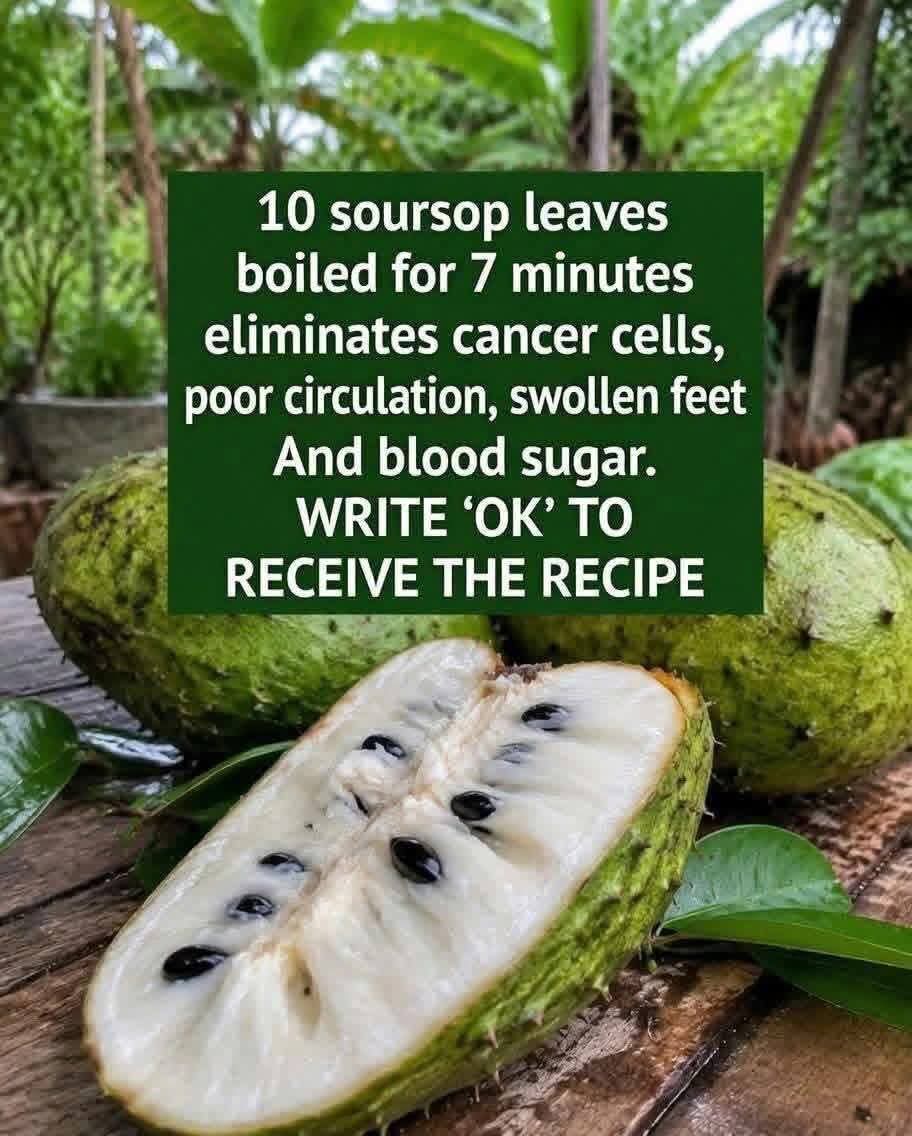
Soursop leaf tea, also called graviola or guanabana leaf tea, is a traditional herbal infusion prepared from the leaves of the soursop tree (Annona muricata). It has become popular online as a natural wellness drink, but many claims about its ability to cure cancer, eliminate cancer cells, treat diabetes, improve circulation, or reduce swollen feet are not supported by clinical evidence. Laboratory and animal research has investigated compounds in graviola, but human studies are lacking.
This recipe presents the traditional preparation as a simple herbal tea—not as a treatment for any medical condition.
Recipe Overview
| Category | Details |
|---|---|
| Recipe | Soursop Leaf Tea |
| Preparation Time | 5 minutes |
| Cooking Time | 7 minutes |
| Total Time | About 12 minutes |
| Yield | 2–3 cups |
| Main Ingredient | Fresh soursop leaves |
| Water Temperature | About 100°C / 212°F to begin |
| Flavor | Mild, earthy, herbal |
| Best Served | Warm or chilled |
Why You’ll Love This Recipe
Soursop leaf tea is simple to prepare and requires only two basic ingredients.
It has a naturally mild herbal flavor and can be enjoyed warm or cooled over ice.
The recipe uses a short simmering time, making it convenient when you want a traditional herbal infusion without complicated preparation.
Most importantly, this version avoids presenting herbal tea as a substitute for appropriate medical care.
Ingredients
| Ingredient | Amount |
|---|---|
| Fresh soursop leaves | 10 leaves |
| Filtered water | 4 cups (960 ml) |
Optional Additions
| Ingredient | Suggested Amount |
|---|---|
| Fresh ginger | 2–3 thin slices |
| Lemon | 1–2 teaspoons juice |
| Cinnamon stick | 1 small stick |
| Honey | 1 teaspoon, optional |
If you are monitoring blood sugar, remember that honey and other sweeteners add carbohydrates and sugar.
Step-by-Step Instructions
Prepare the leaves
Rinse the 10 fresh soursop leaves thoroughly under cool running water. Remove any damaged, yellow, or visibly contaminated leaves.
Bring the water to a boil
Pour 4 cups of filtered water into a saucepan and bring it to approximately 100°C / 212°F.
Add the leaves
Place the cleaned soursop leaves into the boiling water.
Simmer for 7 minutes
Reduce the heat and gently simmer for approximately 7 minutes. Avoid prolonged boiling or making an unusually concentrated preparation.
Strain
Remove the saucepan from the heat. Strain the tea through a fine-mesh strainer into a heat-safe container, removing all leaves.
Cool and serve
Allow the tea to cool to a comfortable drinking temperature. Serve warm, or refrigerate it and serve chilled.
Best Tips
Use clean, healthy-looking leaves from a reliably identified soursop tree.
Wash fresh leaves carefully before preparing the tea.
Do not assume that using more leaves makes the tea healthier. A stronger preparation may also increase exposure to plant compounds.
Avoid adding large amounts of sugar if you are trying to keep the beverage low in added sugar.
Do not use soursop leaf tea as a replacement for prescribed cancer, diabetes, blood-pressure, or other medical treatment.
Best Ingredient Options
Fresh soursop leaves are traditionally used for this type of infusion. If you cannot confidently identify the plant, do not collect leaves from the wild.
Filtered water gives the cleanest flavor.
Fresh ginger can provide a warmer, spicier flavor, while a small amount of lemon can brighten the taste.
If sweetness is desired, use a small amount of honey or another sweetener appropriate for your dietary needs.
Recipe Variations
Ginger Soursop Leaf Tea
Add 2–3 thin slices of fresh ginger while simmering the leaves.
Lemon Soursop Leaf Tea
Allow the tea to cool slightly, then add 1–2 teaspoons of fresh lemon juice.
Chilled Soursop Leaf Tea
Prepare the tea normally, refrigerate until cold, and serve over ice.
Unsweetened Herbal Tea
Simply use soursop leaves and water for a sugar-free beverage.
What to Serve With
Soursop leaf tea can be enjoyed on its own or alongside a light breakfast or snack. Fresh fruit, oatmeal, whole-grain toast, or a small handful of nuts can complement the mild herbal flavor.
Make-Ahead Instructions
The tea can be prepared ahead of time and refrigerated. Allow it to cool before transferring it to a clean, covered container.
For best quality, prepare a fresh batch rather than keeping large quantities for extended periods.
Storage
Store cooled tea in a sealed container in the refrigerator.
Because homemade herbal tea has no commercial preservation system, keep it refrigerated and discard it if its smell, appearance, or flavor changes noticeably.
Reheating
Pour the desired amount into a saucepan or microwave-safe cup and warm gently.
There is no need to bring previously prepared tea back to a rolling boil.
Freezing
Freezing is generally unnecessary for such a simple beverage. If you do freeze it, use a freezer-safe container and leave adequate space for expansion.
Thaw in the refrigerator and use promptly after thawing.
Common Mistakes to Avoid
Using unidentified leaves can result in accidental consumption of the wrong plant.
Using excessive quantities of leaves can produce a much more concentrated preparation than intended.
Adding excessive sugar can turn a naturally low-calorie drink into a high-sugar beverage.
Most importantly, do not believe social-media claims that soursop leaf tea can eliminate cancer cells or cure diabetes. Although laboratory studies have found anticancer activity in some graviola extracts, those findings have not been demonstrated as an effective cancer treatment in humans.
Graviola may also lower blood sugar and blood pressure, potentially creating problems when combined with medications for these conditions.
The National Cancer Institute also advises discussing herbs, supplements, and special teas with a doctor because they can sometimes interact with cancer treatments.
Nutrition Estimate
Because this tea is prepared primarily from water and leaves that are strained out, its nutritional contribution is expected to be very small.
| Nutrient | Estimated per cup |
|---|---|
| Calories | ~0–5 kcal |
| Carbohydrates | ~0–1 g |
| Sugar | ~0 g |
| Protein | ~0 g |
| Fat | ~0 g |
| Fiber | ~0 g |
These values are estimates rather than laboratory nutritional analysis.
Frequently Asked Questions
Can soursop leaf tea cure cancer?
No. There is currently no good clinical evidence showing that soursop leaf tea cures or eliminates cancer. Laboratory studies have investigated graviola extracts against cancer cell lines, but this does not establish effectiveness in people.
Can soursop leaves lower blood sugar?
Some animal research suggests that graviola may have blood-glucose-lowering effects, but the clinical relevance in humans is uncertain. It may also interact with diabetes medications.
Can I drink soursop leaf tea every day?
Daily long-term use should not be assumed to be safe. Safety and effectiveness of medicinal graviola preparations have not been adequately established in humans, and preclinical research has raised concerns about possible neurological effects.
Can soursop tea reduce swollen feet?
There is not sufficient clinical evidence to recommend soursop leaf tea as a treatment for swollen feet. Persistent or unexplained swelling can have many causes and should be medically evaluated rather than treated solely with herbal tea.
Is soursop fruit the same as soursop leaves?
No. Soursop fruit is commonly eaten as food, whereas the leaves are used in traditional herbal preparations. The safety profile of eating the fruit should not automatically be applied to concentrated leaf preparations.
Who should be especially cautious?
Anyone taking medication for blood sugar or blood pressure should speak with a healthcare professional before using graviola products because potential additive effects have been reported. People undergoing cancer treatment should also discuss herbal products with their oncology team.
Final Thoughts
Soursop leaf tea is a simple traditional herbal infusion made by gently simmering fresh soursop leaves in water. While scientific research has investigated potentially interesting compounds in Annona muricata, evidence from laboratory and animal studies should not be confused with proof that the tea treats human disease.
Enjoy it as a traditional beverage rather than a cancer cure, diabetes remedy, circulation treatment, or treatment for swelling.
⚠️**This recipe may not be suitable for everyone, so it is advisable to consult a doctor.**