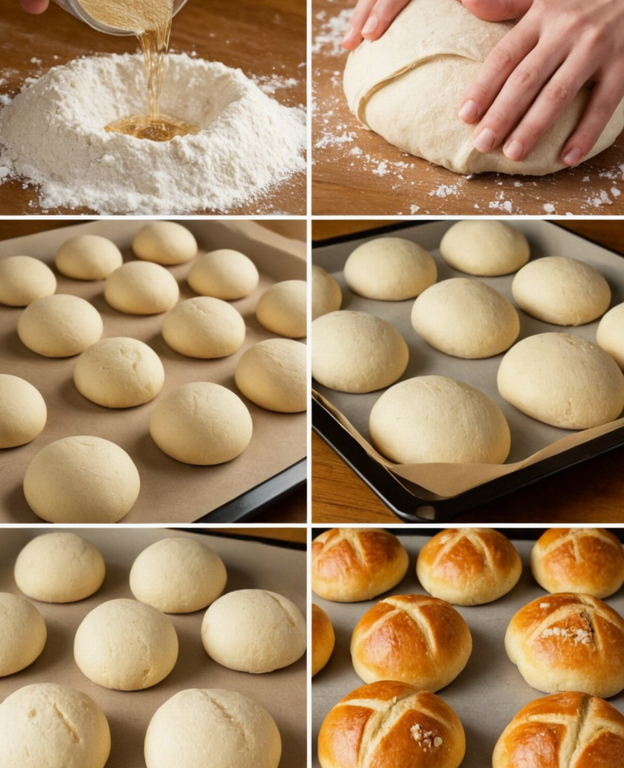
Homemade Soft Bread Rolls
Ingredients:
• 4 cups all-purpose flour
• 2 ¼ teaspoons (1 packet) active dry yeast
• 1 cup warm milk (110°F)
• ¼ cup unsalted butter, melted
• 2 tablespoons sugar
• 1 teaspoon salt
• 1 egg (for dough)
• 1 egg yolk + 1 tablespoon milk (for egg wash)
Preparation:
- In a large bowl, mix warm milk, sugar, and yeast. Let sit for 5-10 minutes until foamy.
- Add flour, melted butter, salt, and egg. Knead the dough for about 10 minutes until smooth.
- Cover and let the dough rise in a warm place for about 1 hour or until doubled in size.
- Divide the dough into equal portions, shape into rolls, and place on a baking sheet lined with parchment paper. Let them rise for another 30 minutes.
- Brush the rolls with the egg wash and bake in a preheated oven at 375°F (190°C) for 15-20 minutes, or until golden brown.
- Let cool slightly before serving.
Variations
For those looking to experiment, these soft bread rolls are wonderfully adaptable. Consider adding herbs and cheeses for a savory twist: mix ½ cup of grated Parmesan or cheddar and two tablespoons of chopped rosemary or thyme into the dough during the kneading stage.
For a sweeter breakfast roll, incorporate cinnamon and raisins: after the first rise, roll the dough into a rectangle, brush with melted butter, and sprinkle generously with a mix of cinnamon, sugar, and a handful of raisins before rolling, slicing, and baking.
Finally, for a richer, eggy texture reminiscent of brioche, you can increase the butter to ½ cup and add an extra egg yolk to the dough, resulting in an exceptionally tender and luxurious crumb.
Another popular variation involves creating stuffed rolls. After the first rise, divide the dough and flatten each portion into a small disc. Place a teaspoon of filling in the center—such as garlic herb butter, a cube of mozzarella for pull-apart rolls, or even a small portion of cooked breakfast sausage—then pinch the dough closed and shape into a smooth ball before the second rise.
For a visually appealing and practical option, try making roll clusters or pull-apart loaves: instead of separating the rolls, place the shaped dough balls touching each other in a round or square baking pan. As they rise and bake, they will join together, creating soft sides perfect for tearing and sharing.
For a different flavor profile, you can alter the liquid base of the recipe. Substitute the warm milk with buttermilk for a subtle tang, or use warm water for a leaner, crustier European-style roll. Incorporating whole wheat flour is also an excellent healthy variation; replace up to half of the all-purpose flour with whole wheat flour, but be aware you may need to add a tablespoon or two more liquid as whole wheat flour absorbs more moisture.
Toppings also offer a quick way to vary texture and taste—before baking, sprinkle rolls with sesame seeds, poppy seeds, everything bagel seasoning, or a dusting of coarse sea salt.
Tips
Success begins with the yeast activation. Ensure your milk is truly warm, not hot (around 110°F), as temperatures above 130°F can kill the yeast. If the mixture doesn’t become foamy after 10 minutes, your yeast may be inactive, and it’s best to start fresh. This foaming is a critical sign that your yeast is alive and ready to leaven the dough effectively.
Additionally, dissolving the sugar in this step provides food for the yeast, boosting its activity.
The kneading process is crucial for developing gluten, which gives the rolls their structure and soft chew. Knead by hand or with a stand mixer fitted with a dough hook for the full 10 minutes, until the dough is smooth, elastic, and springs back lightly when poked.
If the dough feels too sticky, resist the urge to add too much extra flour; a slightly tacky dough often yields softer rolls. Instead, lightly oil your hands or work surface to prevent sticking without incorporating excess flour.
For the best rise, create a warm, draft-free environment. A turned-off oven with the light on or a sunny spot on the counter works well. To test if the dough has sufficiently doubled in size during the first rise, perform the “finger dent test”: gently press two fingers about an inch into the dough.
If the indentation remains, the dough is ready. For a golden, shiny finish, ensure your egg wash (egg yolk beaten with a tablespoon of milk) is applied gently but thoroughly just before baking.
How to Store
For short-term storage at room temperature, allow the baked rolls to cool completely to avoid condensation, which causes sogginess. Place them in a paper bag or a loosely covered bread box for up to two days. A plastic bag will soften the crust but can be used if a softer exterior is preferred.
Never store bread in the refrigerator, as the cold temperature accelerates starch retrogradation (staling), making the rolls dry and crumbly much faster.
To freeze for long-term storage, these rolls freeze exceptionally well. Once completely cooled, wrap each roll individually in plastic wrap and then place them all in a heavy-duty freezer bag, removing as much air as possible. They can be frozen for up to three months. This method allows you to thaw only the number of rolls you need, preserving freshness and preventing waste.
The best method for reheating and reviving rolls depends on their state. To thaw frozen rolls, leave them wrapped at room temperature for a few hours or overnight. To restore that fresh-baked softness and warmth, place room-temperature or thawed rolls in a preheated 350°F oven for 5-10 minutes. For a single roll, microwaving it for 10-15 seconds can soften it, but be cautious as it can become tough if overheated. For a crisp crust, spritz the roll lightly with water before oven reheating.
Conclusion
These homemade soft bread rolls are a testament to the simple pleasure of baking from scratch. With a straightforward process and accessible ingredients, they offer a rewarding experience that fills your kitchen with an irresistible aroma and yields results far superior to most store-bought alternatives. Their soft, fluffy interior and golden, delicate crust make them the perfect companion to soups, salads, and family dinners, or simply enjoyed on their own with a pat of butter.
Mastering this basic recipe opens the door to endless culinary creativity, from savory herb infusions to sweet, indulgent treats. Whether you stick to the classic version or explore the many variations, the act of baking these rolls is a fulfilling endeavor. We encourage you to embrace the process, share the warm results with loved ones, and enjoy the timeless satisfaction of serving something made entirely by your own hands. Happy baking
- Enjoy!